Denver City, TX Pole Barn Builders | Post-Frame Builders for Yoakum County
Denver City is on the far western edge of Texas near the New Mexico border, built up around the Wasson oil field. Pole Barn Builders Lubbock TX builds post-frame structures here the same way we build them anywhere on the South Plains: engineered to the wind this county actually sees, on footings sized to the ground an auger actually finds.
Get a quote on your building
Tell us the size, the use and where the site is. We will come back with a scope and a price, not a brochure.
Pole Barn Builders in and around Denver City, TX
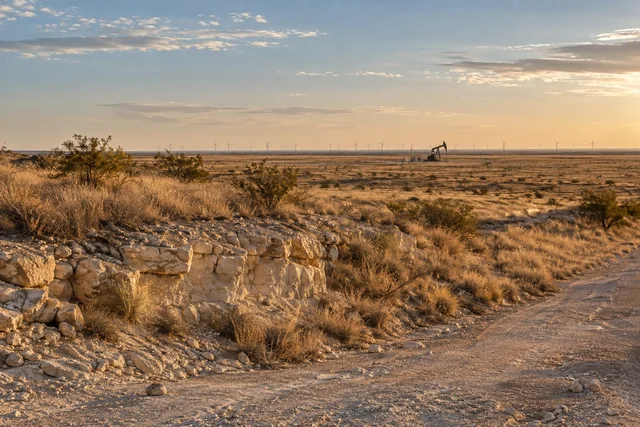
Denver City sits in west texas caliche rangeland, Yoakum County. Open high plains rangeland running west toward New Mexico, with caliche outcrops close to the surface and cattle and oil sharing the same ground. Whatever you're building there, working shop, ag storage, a garage, we start from the ground up: what the soil actually is at your site, and what the wind exposure category means for the bracing.
What we know about building near Denver City
- Jurisdiction, checked before design
In unincorporated Lubbock County, zoning and building permits are handled at the county level through the Building Permits Office at 1625 13th Street. That's what we design to for Denver City.
- Ground that varies across one site
South Plains soil is not one thing. It ranges from fine sandy loams to clay loams, frequently sitting on dense, rocky caliche a few feet down, and each of those layers behaves differently under a loaded column. That's what we design to for Denver City.
- What we get asked for most
Around Denver City, the most common requests are working shops, ag storage buildings and garages sized to match an existing house or an existing operation.
- Wind bracing sized to the real exposure
Lubbock County's design wind speed runs 120 to 130 mph under the current ASCE 7 standard, and that number, not a generic regional average, is what the structural design is built around. That's what we design to for Denver City. The South Plains is flat, open country with very little to break the wind, which is why structural calculations here default to Exposure Category C rather than the milder Exposure B used in built-up areas, and that bumps the bracing requirement up accordingly. That's what we design to for Denver City.
Before we mobilize near Denver City
- Locates called
811 called and marks placed before any ground work near Denver City begins.
- Access assessed
Ready-mix, material trailers and equipment all need firm ground and room to turn.
- Permits in hand
Whether that's a Denver City town permit or a county submission, it needs to exist before the first hole.
- Site graded
Where site prep near Denver City is part of the job we do it; where someone else has done it, we check it first.
What goes wrong, and what we do instead
| What goes wrong | What it causes | What we do instead |
|---|---|---|
| Drainage around the building left to the natural grade | Water pooling against embedded posts or a slab edge after a hard rain. | Grading and a drainage route planned before the first post goes in. |
| A footing near Denver City poured without checking what's actually at the bottom of the bore | Differential settlement as one column bears on different material than its neighbors. | Bearing checked in every bore, with the hole deepened or widened where it's needed. |
| Wind bracing on a Denver City-area building sized to a generic regional average rather than the site's actual exposure category | Under-braced framing that racks in a real South Plains wind event. | Exposure category confirmed for the specific site before the bracing is engineered. |
Local ground conditions
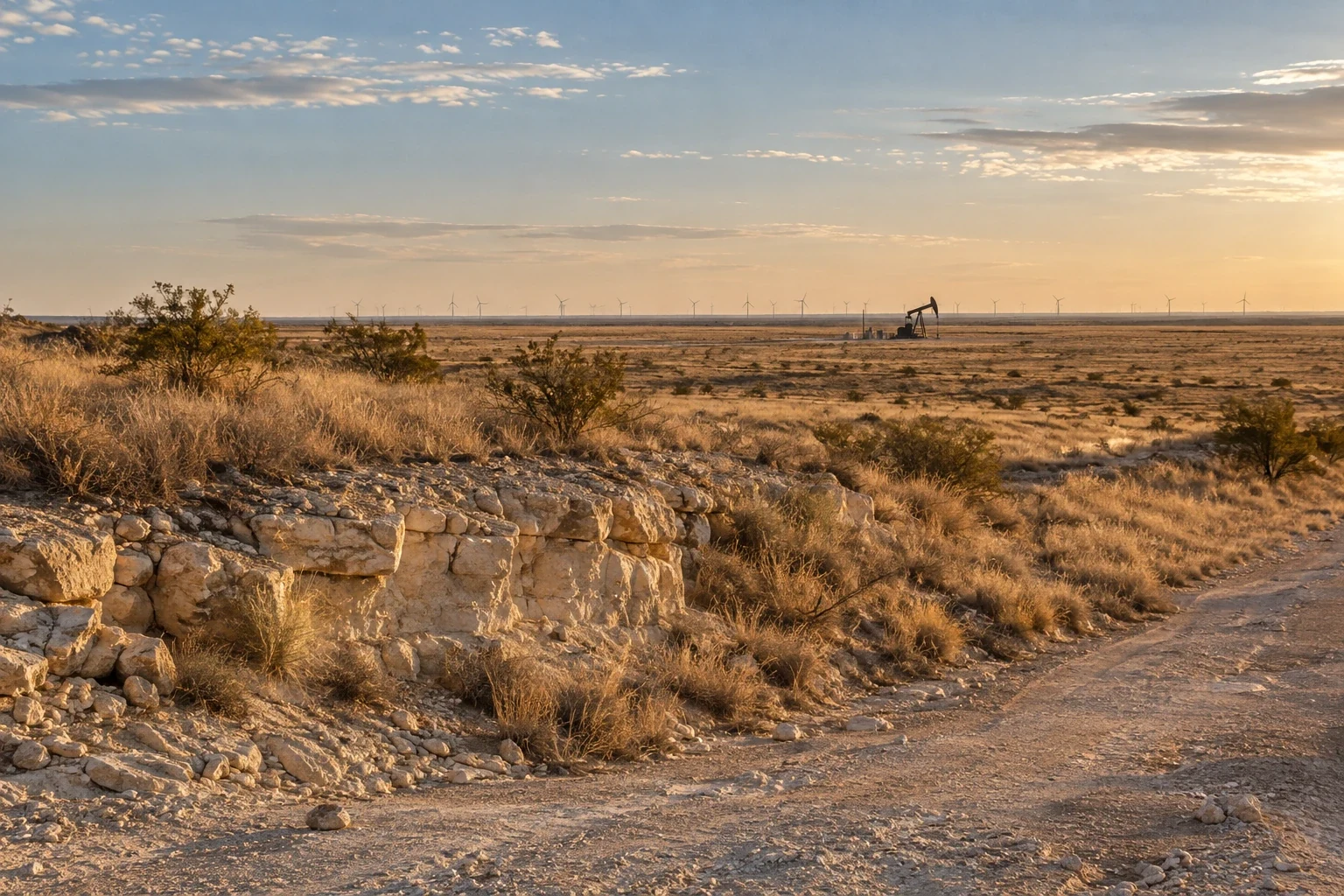
Building near Denver City means working with west texas caliche rangeland conditions specifically. Caliche is the pale, cemented calcium-carbonate layer that sits under a lot of this county, and it is genuinely useful ground to bear a footing on once you're through the softer soil above it. That's what we design to for Denver City.
Expansive clay is the soil condition that catches people out here. It moves a lot between a wet spring and a dry August, and a footing that isn't sized and placed with that movement in mind will show it within a few seasons. That's what we design to for Denver City. That's exactly the kind of site-specific detail that a generic, one-size-fits-all foundation spec misses, and it's why we check the ground near Denver City before finalizing any footing design.
How it usually gets built, and how we build it
How it usually gets built
Quote a Denver City-area building off a standard plan, auger the holes without checking bearing, and find out about the ground conditions after the fact.
How we build it
Check the soil near Denver City first, confirm which jurisdiction governs the parcel, then design the footing and bracing to what we actually find.
Why we check the ground near Denver City before quoting
A quote based on a standard footing spec, without checking what's actually under a Denver City-area site, is a guess dressed up as a number. South Plains ground moves from sandy loam to caliche to pockets of expansive clay within a short distance, and the footing that's right for one is wrong for another.
Local data and figures
Denver City sits on the same flat, largely unobstructed South Plains terrain as the rest of Yoakum County, which is why rural and edge-of-town sites here default to Exposure Category C for wind design rather than the milder Exposure B used in a sheltered, built-up area.
How a Denver City build runs
- Step 01Site visit
We walk the ground near Denver City, look at access and drainage, and talk through what you're building. No charge.
- Step 02Jurisdiction and design
We confirm whether Denver City town rules or Yoakum County rules govern the parcel, then design to the actual wind exposure.
- Step 03Permits and ground work
Submission prepared and filed, then the pad, footings and bearing checked at every bore.
- Step 04Build and hand over
Frame, roof, cladding, openings and finish, with a walk-through at the end.
How we build near Denver City
- Yoakum County jurisdiction confirmed first
Whether Denver City permitting runs through its own town office or the Lubbock County Building Permits Office depends on exactly where the parcel sits, and we check that before design.
- Ground checked at the site, not assumed
The ground under a Lubbock-area building can shift from sandy loam to a harder caliche shelf within the depth of a single footing hole, and knowing which one you're building on changes how that footing is sized. That's what we design to for Denver City.
- Wind exposure category confirmed
Open, unobstructed terrain puts most rural and edge-of-town South Plains sites into Exposure Category C for wind design, a stronger bracing category than the Exposure B a sheltered urban lot would use. That's what we design to for Denver City.
- Drainage planned around the building
A pole barn's roof concentrates a large amount of rainfall into a handful of discharge points, so site grading and drainage around the embedded posts have to be planned, not left to chance, or standing water will sit against timber that should stay dry. That's what we design to for Denver City.
Everything we build near Denver City
Every service below is available near Denver City. Local jurisdiction changes what's permitted on a given parcel; it doesn't change what we're able to build.
- Agricultural Pole Barns
- Horse Barns & Equestrian Buildings
- Machine Sheds & Equipment Storage
- Livestock Barns
- Hay Storage Buildings
- Pole Barn Garages
- RV & Boat Storage Pole Barns
- Pole Barn Workshops
- Commercial Pole Barns
- Hobby Shops & Man Cave Pole Barns
- Pole Barn Construction
- Pole Barn Design & Planning
- Pole Barn Foundation & Concrete Work
- Pole Barn Framing
- Pole Barn Roofing Installation
- Pole Barn Siding Installation
- Pole Barn Electrical Rough-In
- Pole Barn Insulation Installation
- Pole Barn Repair
- Pole Barn Renovation & Additions
- Post-Frame Building Construction
- Insulated Pole Barns
- Pole Barns with Living Quarters (Barndominiums)
- Custom Pole Barn Doors & Windows
- Pole Barn Loft & Second-Story Additions
- Metal Roof Pole Barns
- Wood-Sided Pole Barns
- Pole Barn Ventilation Systems
- Pole Barn Site Prep & Grading
- Pole Barn Wind Load Reinforcement
Other communities in West Texas Caliche Rangeland
Named here for reference; use the Service Areas menu above to open any of these.
- Levelland, TX
- Littlefield, TX
- Muleshoe, TX
Common questions
What people near Denver City ask before starting.
What's the ground like around Denver City?
The ground under a Lubbock-area building can shift from sandy loam to a harder caliche shelf within the depth of a single footing hole, and knowing which one you're building on changes how that footing is sized. That's what we design to for Denver City.
Do I need a permit for a pole barn in Denver City, TX?
It depends on exactly where the parcel sits. Denver City has its own municipal permitting process for work inside town limits. Outside any town limits, In unincorporated Lubbock County, zoning and building permits are handled at the county level through the Building Permits Office at 1625 13th Street. That's what we design to for Denver City. We establish which applies before we design anything.
Do you build outside Denver City's town limits too?
Yes. A good share of our work around Denver City is on acreages and farms just outside any incorporated boundary, where county rather than town rules govern setbacks and permitting.
What wind speed do you design to in Denver City?
Wind, not snow, is the load that governs a South Plains pole barn. The county-wide design figure sits at 120 to 130 mph under ASCE 7. That's what we design to for Denver City.
Are quotes free in Denver City?
Yes. Quotes and site visits cost nothing, and for a Denver City-area site the visit is worth having, since ground conditions and access both affect the design.
How deep do footings go for a building in Denver City?
The columns are set to a 4-foot minimum embedment, which is what it takes on this ground to combat wind uplift and reach subsoil that will actually hold the building still. That's what we design to for Denver City.
What wind exposure category applies around Denver City?
Open, unobstructed terrain puts most rural and edge-of-town South Plains sites into Exposure Category C for wind design, a stronger bracing category than the Exposure B a sheltered urban lot would use. That's what we design to for Denver City.
How long does a build take in Denver City?
A straightforward shell near Denver City can go up in a couple of weeks of working weather. Ground conditions, concrete cure time and inspections are what usually extend that.
Building near Denver City
Tell us the site and what you want on it near Denver City. We'll check the jurisdiction and the ground before we design anything.